Best Hair Transplant in Delhi: Everything You Need to Know
Every strand of hair you find on your pillow, in the shower drain, or tangled in your comb adds up to one nagging question: “Is this normal, or is it time to actually do something about it?”
If you’ve been putting off researching a solution because it feels confusing, too many clinics, too many techniques, and too much conflicting advice—this guide is for you. Consider this your one-stop resource covering everything about a hair transplant in Delhi, from causes to costs to myths worth busting.
Is hair loss normal or a warning sign?
Losing 50–100 strands a day is completely normal. It’s when you notice a receding hairline, a widening parting, or visible scalp through thinning patches that it’s worth getting evaluated. Catching it early opens up more options, including non-surgical hair fall treatment in delhi, before a transplant becomes the only route.
Types of Hair Loss Explained
Type
What It Looks Like
Common Cause
Androgenetic Alopecia
Receding hairline, crown thinning
Genetics, hormones
Telogen Effluvium
Suddenly, diffuse shedding
Stress, illness, deficiency
Alopecia Areata
Patchy hair loss
Autoimmune
Traction Alopecia
Thinning at hairline edges
Tight hairstyles, extensions
Understanding which type you’re dealing with is the first real step toward the best hair loss treatment in Delhi because each type responds to a different approach.
Hair Transplant Techniques, Simplified
FUE (Follicular Unit Extraction): Individual follicles are extracted and implanted one at a time. Minimal scarring and faster healing are ideal for most patients today.
FUT (Follicular Unit Transplantation): A strip of scalp is removed from the donor area and dissected into grafts. Can yield more grafts in one session but leaves a linear scar.
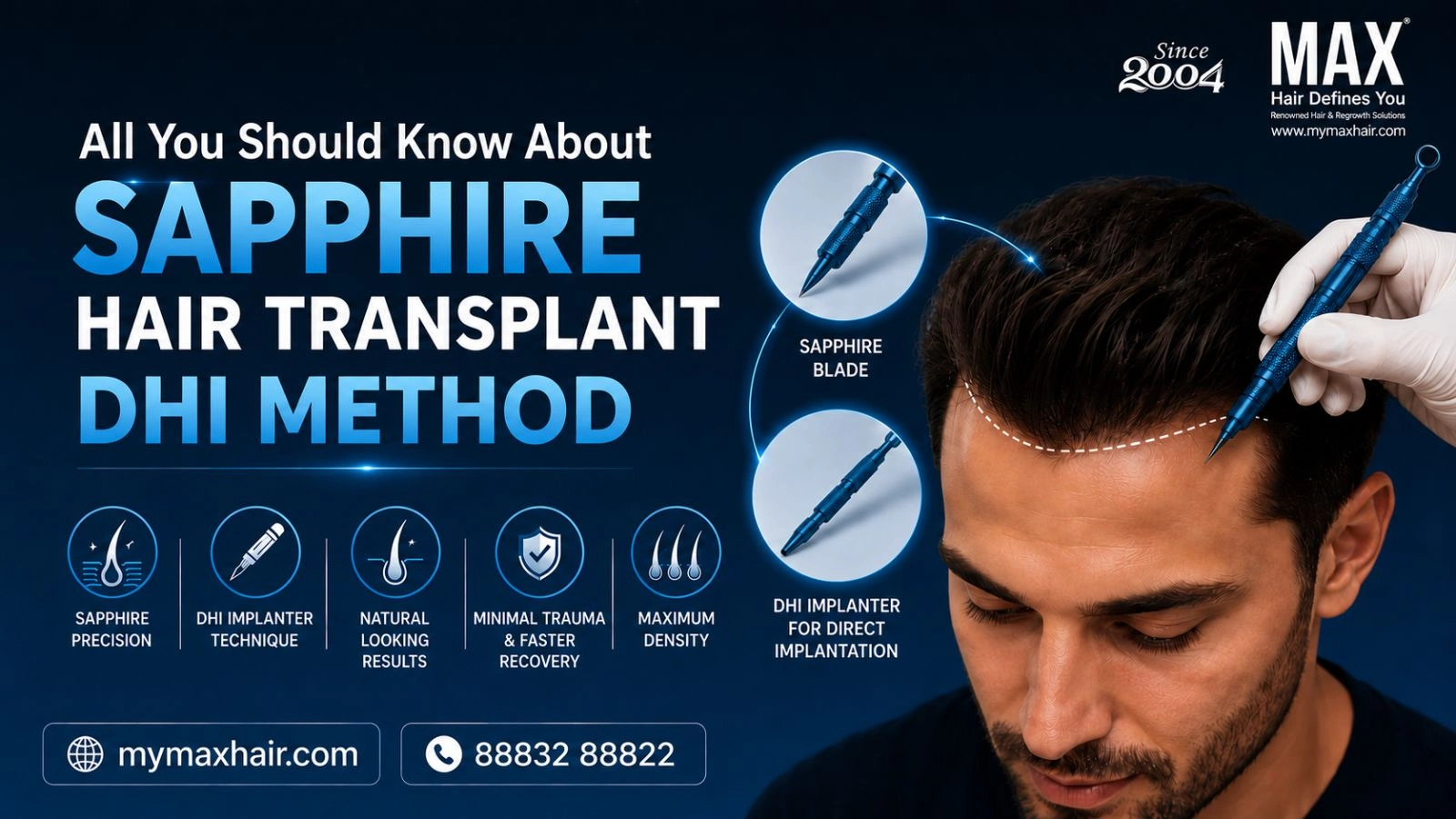
DHI (Direct Hair Implantation): Follicles are implanted directly using a specialized pen-like tool, allowing precise control over angle and direction, often used for hairline design.
There’s no universal “best” technique; the right one depends on your donor supply, the area being treated, and your recovery timeline. This is exactly why a proper consultation matters more than a generic online search for the best hair transplant clinic in Delhi.
What Actually Happens on Procedure Day
The scalp is cleaned and local anesthesia is applied
Grafts are extracted from the donor area (typically the back/sides of the scalp).
Recipient sites are carefully created following your natural hair growth direction
Grafts are implanted one by one
You’re given aftercare instructions and sent home the same day
Most procedures take between 4 and 8 hours, depending on the number of grafts, and it’s genuinely walk-in, walk-out; no hospital stay is required.
The Hair Growth Timeline (What to Actually Expect)
Weeks 1 to 2: Scabbing and redness subside
Weeks 3 to 6: “Shock” loss of transplanted hair sheds (this is normal, not failure)
Months 3 to 4: New growth begins
Months 6 to 9: Visible thickness and density improve
Months 10 to 12: Final results settle in
Anyone promising instant, dramatic results within weeks isn’t giving you an honest picture; real transplant results take patience.
Non-Surgical Options Worth Knowing About
Not everyone needs surgery right away. A well-rounded hair care clinic in Delhi should also offer the following:
PRP Therapy, which usea your own blood plasma to stimulate follicles
Mesotherapy nutrient injections directly into the scalp
Medicated Treatments, topical or oral solutions to slow further loss
Hair Replacement in Delhi: non-surgical systems for immediate, natural-looking coverage
These can work as a standalone treatment for early thinning or alongside a transplant for the best long-term results.
Common Myths About Hair Transplants Busted
Myth: Hair transplants look fake or unnatural. Fact: With FUE/DHI and an experienced surgeon, results follow your natural hairline and growth pattern, making them virtually undetectable.
Myth: It’s an extremely painful procedure. Fact: It’s performed under local anesthesia; most patients report only mild discomfort, not significant pain.
Myth: Transplanted hair falls out again eventually. Fact: Since grafts are typically taken from genetically resistant donor areas, transplanted hair grows permanently.
Myth: Only men get hair transplants. Fact: Women experiencing pattern thinning or hairline recession are increasingly opting for transplants too.
How to Choose the Right Clinic
Qualified, experienced surgeon (not just a technician)
Transparent, itemized pricing
Real before/after case studies
Clear explanation of the technique and why it suits your case
Proper aftercare and follow-up support
Clinics such as MAX Hair Clinic have gained trust in Delhi by combining this kind of transparency with a full range of surgical and non-surgical solutions, which is the standard every patient should look for, whichever clinic you eventually choose.
Final Thoughts
A hair treatment in Delhi, whether surgical or not, is a decision worth taking seriously, not rushing into because of a discount deadline or flashy ad. Understand your hair loss, know your options, ask the right questions, and choose a team that treats your case individually. That’s genuinely how you find the best hair treatment in delhi for you.
Ready to Stop Guessing and Start Getting Answers?
Book a one-on-one consultation and get a clear, honest plan tailored to your hair, not a generic package.
Book an Appointment: +91 84802 90000 | 1800 890 9669
FAQ
Clear answers to help you understand treatments, safety, and expected outcomes.
Most surgeons recommend waiting until your hair loss pattern has stabilized, typically after age 25, since transplanting too early may require future touch-ups as loss progresses.
This depends on the extent of your hair loss and desired density. A proper scalp evaluation during consultation gives you an accurate graft estimate, not a generic number quoted online.
When performed by a qualified surgeon with proper technique, success rates are high. Following aftercare instructions closely plays a major role in ensuring healthy graft survival.
Yes. Many patients pair their transplant with PRP therapy or medicated treatments to support faster healing and maintain the health of existing hair alongside new growth